 Noel D'Costa
Contents
- What defence manufacturing asks of an ERP
- Contract costing and project systems come first
- How SAP handles it
- The questions to answer in design
- Traceability, compliance and export control
- Serial and configuration traceability
- Export control and trade compliance
- A note on SAP's defence industry naming
- Why the finance design decides the outcome
- SAP, IFS or Infor for defence manufacturing
- Where to start
- Frequently asked questions
The best ERP for defence manufacturing is the one that costs, bills and reports by contract, and runs the work as projects. Shop-floor features come second.
I have implemented ERP in defence manufacturing, and the areas that mattered most were contract costing and project systems (SAP Project System, PS). Get those two right and the rest of the design has something to hang on. Get them wrong and finance spends years reconciling by hand.
For the wider vendor comparison across all manufacturing types, start with my guide to the best ERP for manufacturing. This article covers what is different when your customer is a defence ministry or a prime contractor.
A general manufacturer sells products from stock or to order. A defence manufacturer usually delivers against a contract: a programme of work with its own budget, milestones, billing terms and reporting obligations.
That changes what the ERP has to do. Five requirements sit on top of normal production, purchasing and inventory:
- Contract costing. Every cost has to land on the right contract, and the customer may audit how it got there.
- Project structure. Engineering, production, testing and delivery run as one project with phases and milestones, not as unrelated orders.
- Serial and configuration traceability. You need to know which components, at which revision, went into which delivered unit.
- Export control. Controlled items and technical data need classification, licences and screening before anything ships.
- Data security. Who can see which contract, drawing or customer record is a design question, not an afterthought.
Most ERP systems can be made to do all five. The difference between them is how much of it is standard and how much you build.
In the defence work I have done, contract costing and project systems mattered most. Everything else in the design depended on how those two were set up.
The reason is simple. A defence contract is often priced, billed and audited on its own terms, and finance reports on it to the customer. If the ERP cannot show cost, revenue and margin by contract, the controllers rebuild it in spreadsheets every month.
How SAP handles it
In SAP S/4HANA, a contract is usually modelled as a project in SAP Project System. A work breakdown structure (WBS) holds the budget and the cost collectors. The sales order items for the contract are assigned to WBS elements, so revenue and cost meet in the same place.
Billing follows the contract type. Fixed-price contracts usually bill by milestone.
Contracts paid on cost incurred can use resource-related billing. SAP's Project Financials Control course describes it as billing from actual costs through the Dynamic Item Processor, which can be combined with a milestone billing plan.
Revenue recognition, work in progress and margin reporting then run against the WBS. That is where most of the design effort goes, because it touches Controlling (CO), Financial Accounting (FI), Sales and Distribution (SD) and Production Planning (PP) at once.
One check before you design: some older Project System functions sit in SAP's compatibility scope in S/4HANA. SAP has moved several of them into the permanent scope in recent releases. Confirm the status of each function you plan to use against SAP Note 2269324.
The questions to answer in design
These are the decisions that shape contract costing in any ERP, not only SAP:
- What is one contract in the system? One project per contract, one per lot or one per delivery batch.
- Where do production costs settle? Production orders settle to the WBS element, and the settlement rules decide what the contract report shows.
- How is revenue recognised? By milestone, by cost incurred or by units delivered, and how that maps to your accounting standard.
- How are overheads applied? The customer may audit the rates, so they need to be traceable in the system.
- What does the customer report look like? Design the report first and work back to the cost objects.
The finance side of SAP is covered in more depth in my SAP FICO guide. Production orders, MRP and the planning cycle that feed the project are in my SAP PP guide.
The second group of requirements is about proving what you built and who you can ship it to. These are design decisions across several systems, and each one needs a single owner.
Serial and configuration traceability
Defence customers often expect to know exactly what went into each delivered unit: part numbers, serial numbers, revisions and the changes made after delivery. In SAP, serial numbers are controlled through a serial number profile on the material master, as SAP's serial number lesson shows.
Serialisation alone does not give you configuration control. The engineering structure usually lives in a product lifecycle management (PLM) system.
The as-built record may be captured on the shop floor, and the ERP holds the stock and the cost. Decide which system owns the as-designed, as-built and as-maintained records before configuration starts.
Shop-floor capture is usually the job of a manufacturing execution system (MES) such as SAP Digital Manufacturing, which sits on top of the ERP. My article on ERP and MES in manufacturing covers where that line falls.
Export control and trade compliance
Export control rules, such as the US International Traffic in Arms Regulations (ITAR) and Export Administration Regulations (EAR), apply to the item, the technical data and the destination. Your ERP needs to know how each item is classified and stop a shipment that lacks a licence.
In the SAP world this sits in SAP Global Trade Services (GTS). SAP's GTS learning content describes compliance management covering legal control, sanctioned party list screening and embargo checks, with licence monitoring for procedures that need one.
Treat export control as its own workstream with its own sign-off. Your trade compliance officer, not the ERP team, decides the classifications.
A note on SAP's defence industry naming
SAP sells a Defense & Security solution in S/4HANA, and it is easy to assume it is for defence manufacturers. It is not. SAP's Defense & Security course covers force elements, force structures, operations and exercises, which is the world of armed forces.
A defence manufacturer normally runs standard SAP S/4HANA with Project System, plus trade compliance and, where needed, PLM and MES. Check which industry functions you are actually buying before the licence is signed.
A defence manufacturer's ERP is judged by how it costs, bills and reports each contract, not by its shop-floor demo.
The most common reason I see manufacturing ERP projects fail is that the design is not agreed in its totality, especially in finance. In defence manufacturing that risk is higher, because so much of the design is contract finance.
It happens in a predictable way. Production, supply chain and engineering agree their designs.
Finance signs off a chart of accounts and a cost centre structure. Nobody signs off the full flow from contract to WBS to production order to settlement to revenue to the customer report.
The gaps show up in testing, or worse, at the first month-end close. By then the configuration is built and every fix is a change request.
This is the order that keeps the design whole:
- Contract typesFixed price, cost-based, mixed
- Cost objectsOne WBS per contract, lot or batch
- SettlementProduction orders to WBS
- RevenueMilestone, cost incurred or units
- Customer reportBuilt from the WBS, not a spreadsheet
- Sign-offFinance, programmes and operations together
One agreed design before build starts
Planning matters as much as design. Across the 21 SAP programmes I have led or rescued, the biggest mistake I see is not planning properly at the start. Budgets get hit in the Explore phase, as the list of reports, interfaces, conversions, enhancements, forms and workflows (WRICEF) grows.
Two numbers to plan for. Data migration takes 30 to 40 percent of the effort in my experience, and testing about 35 percent. Give open contracts, with their costs, billing and history, a migration plan of their own.
Three systems usually reach a defence manufacturer's shortlist. The right one depends on your size, how project-driven your work is and what your customers and partners already run.
The table compares how each vendor positions itself for the sector. It is based on the vendors' own material, so test every claim against your contracts in a scripted demo.
| System | How the vendor positions it | Where it tends to fit | What to test in the demo |
|---|---|---|---|
| SAP S/4HANA with Project System | Core ERP with project, contract billing and trade compliance (GTS) alongside | Large, multi-site manufacturers, primes and suppliers already on SAP | Contract costing from WBS to customer report; compatibility scope status of the PS functions you need |
| IFS Cloud | Positioned on ifs.com for aerospace and defence manufacturers, with programme delivery and compliance | Project-based and asset-heavy manufacturers that also run service or maintenance | Project accounting depth, and how manufacturing and service share one record |
| Infor CloudSuite Aerospace & Defense | Described by Infor as a multi-company ERP for the sector, covering compliance, quality and project delivery | Mid-sized suppliers that want a sector-specific cloud product | Contract cost reporting, serial traceability and how much is configured versus built |
Whichever you shortlist, give the vendor one of your real contracts. Ask them to show the contract set up, a cost posted, a milestone billed and the margin reported, in their system, before you see anything else.
For SAP planning above MRP, my comparison of MRP Live vs PP/DS vs IBP explains when each tool fits.
Contract costing is where defence ERP programmes are won or lost, so start there. Before any vendor demo, write down your three most common contract types and how each one is costed, billed and reported to the customer today.
That one page becomes your demo script and the first test of every design. It also shows the gaps your finance team is filling by hand right now.
For budget ranges by company size, see how much SAP implementation costs and my guide to manufacturing ERP cost.
If you want an independent view on a defence ERP selection or a contract costing design, I help organisations with this. You can contact me here.
What is the best ERP for defence manufacturing?
The one that costs, bills and reports by contract and runs the work as projects. SAP S/4HANA with Project System, IFS Cloud and Infor CloudSuite Aerospace & Defense are the usual shortlist. Test each one against your own contract types before you compare anything else.
What matters most in an ERP for defence manufacturing?
Contract costing and project systems. In the defence manufacturing work I have done, those were the areas that mattered most. If the ERP cannot show cost, revenue and margin by contract, finance rebuilds it in spreadsheets every month.
Is SAP Defense & Security for defence manufacturers?
No. SAP's Defense & Security solution covers force elements, force structures, operations and exercises, which is for armed forces organisations. Defence manufacturers normally run standard SAP S/4HANA with Project System, plus SAP Global Trade Services for export control.
How does SAP handle export control for defence manufacturers?
Through SAP Global Trade Services. Its compliance management covers legal control, sanctioned party list screening and embargo checks, with licence monitoring for procedures that need one. Your trade compliance officer should own the product classifications, not the ERP team.
Why do defence manufacturing ERP projects fail?
The most common reason is that the design is not agreed in its totality, especially in finance. Each module signs off its own part, but nobody signs off the full flow from contract to project to production order to revenue to the customer report. The gaps then appear in testing or at the first month-end close.
Do defence manufacturers need an MES as well as an ERP?
Often, when the customer expects full serial and as-built traceability from the shop floor. An MES such as SAP Digital Manufacturing records what happened at each step and sends confirmations back to the ERP. Decide which system owns the as-built record before either is configured.

Written by
Noel D'Costa
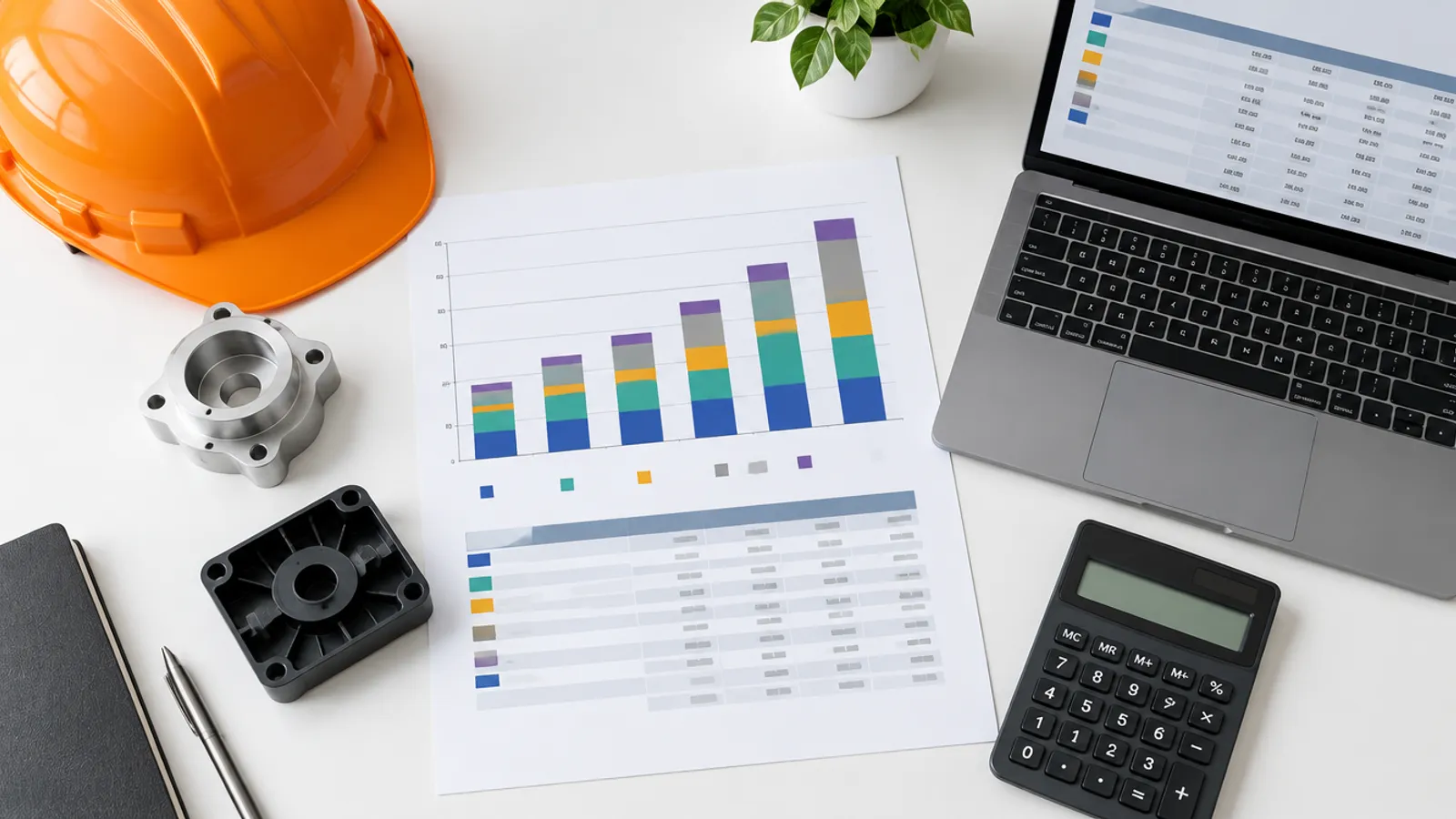
Manufacturing ERP cost: what you pay and where it goes
What an ERP costs a manufacturer by company size, where the money goes in a plant (shop-floor integration, master data, testing and finance design) and the hidden costs that land after the contract is signed.
Best ERP for manufacturing in 2026: by size and type
SAP S/4HANA for large, complex and regulated manufacturers; Epicor Kinetic for most mid-sized manufacturers of about 200 to 1,000 staff; Acumatica for smaller plants. A comparison table, recommendations by size and type, and when you need an MES on top of the ERP.
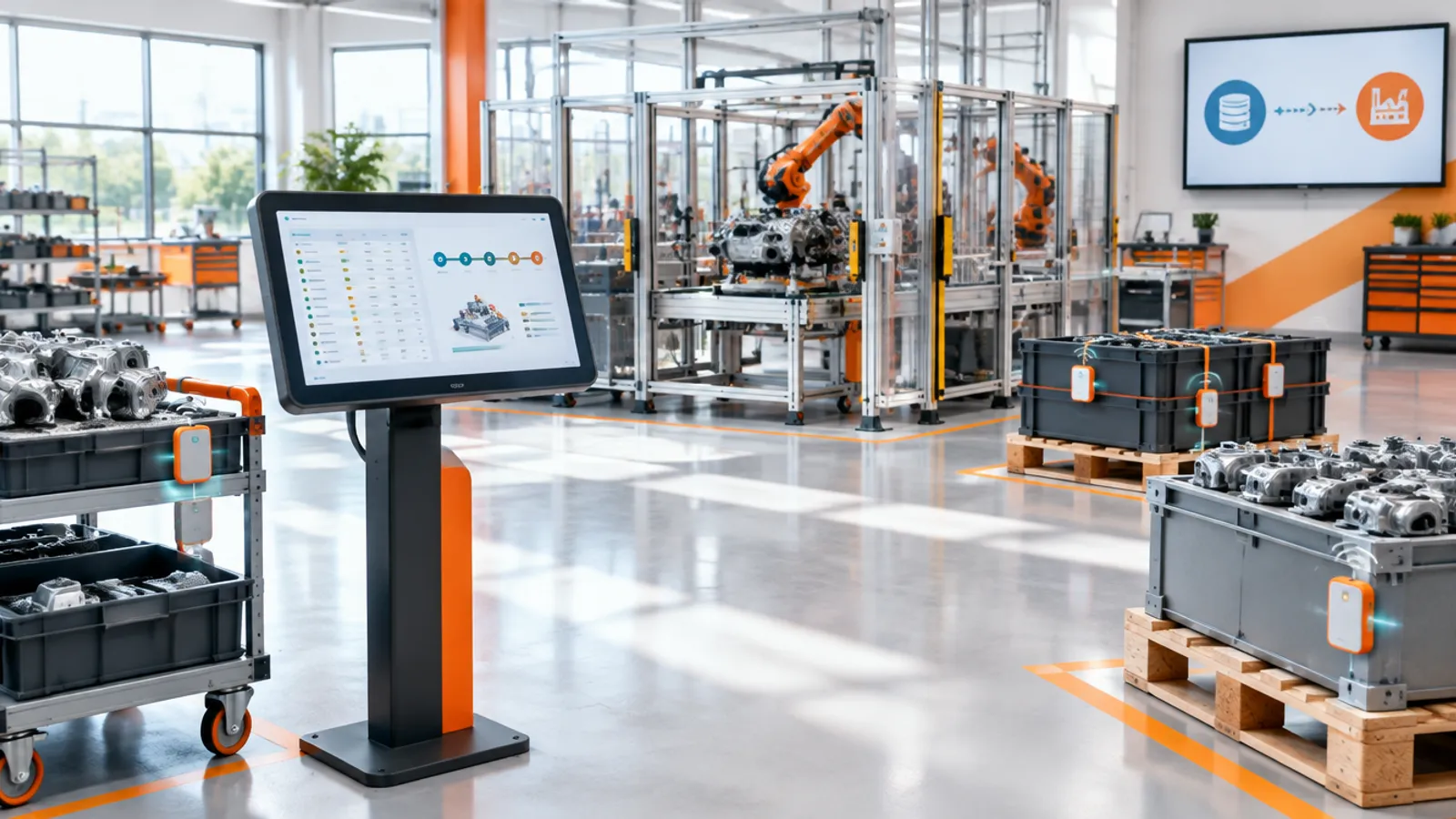
ERP vs MES in manufacturing: who owns what
An ERP plans, costs and accounts for production; an MES runs it on the shop floor and reports back. What each one owns, where SAP Digital Manufacturing, Siemens Opcenter and Kinexon tracking fit, and the integration mistakes to avoid.

SAP discrete vs process manufacturing: what changes
In SAP, discrete manufacturing runs on production orders, BOMs and routings, process manufacturing (PP-PI) on process orders and master recipes, and repetitive manufacturing on period-based planning. What each one changes in master data, batches, quality and costing, and how mixed-mode plants such as plastics and steel combine them.
Next step
Running an ERP programme right now?
If this article touched on a programme you are live in right now, a 30-minute conversation usually gets further than another week of internal analysis.