
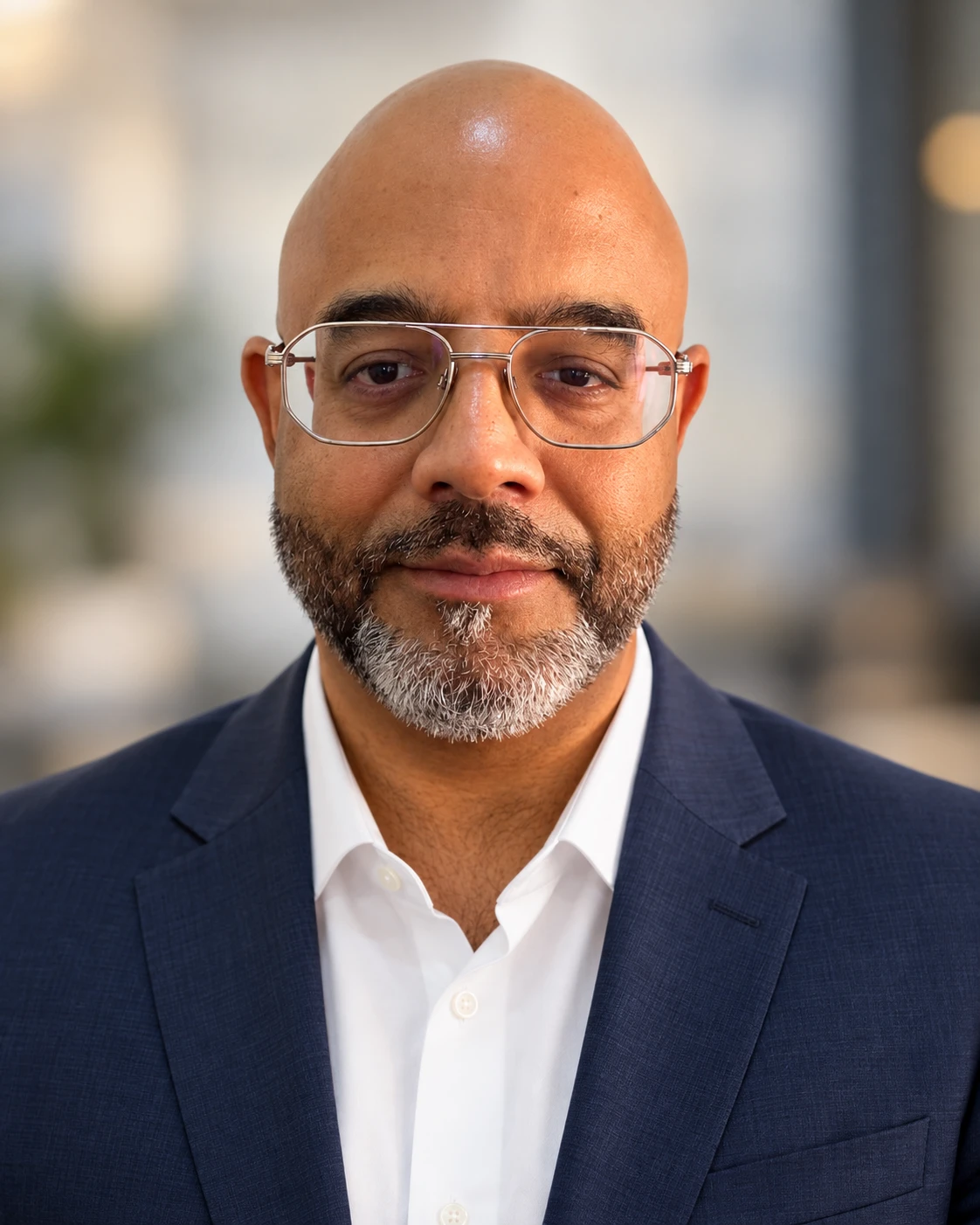
Soy Noel. Asesor sénior de ERP e IA. Llevo 25 años en este trabajo, casi siempre en su lado más difícil. CIMA. AICPA. Máster en Contabilidad. Las titulaciones importan menos que el patrón que revelan: llegué al ERP por el cierre contable, no por la configuración.
La cifra principal son más de 700 millones de dólares en transformaciones entregadas en EDGE Group, Etihad Airways, ADNOC, entidades del PIF, DXC y el Gobierno de los EAU. El trabajo en sí se reparte en tres frentes:
Programme recovery
Late, over budget, or technically broken implementations. I come in, separate what's real from what's political, and rebuild the plan.
ECC to S/4HANA and cloud ERP
Migration design, cutover, Finance and Supply Chain transformation, data quality.
AI on ERP data
Governance, agentic workflows on BTP, models that sit on SAP, Oracle, or Microsoft foundations without hallucinating the ledger.
No vendo licencias. No revendo servicios de implementación. Mi sueldo no depende de las horas de Activate ni de las suscripciones a BTP. Esa independencia es el punto central.
He estado en los dos lados del contrato. Como cliente que compra estos sistemas. Como consultor que los implementa. Esa combinación es la razón por la que veo dónde se rompen los programas antes de que se rompan.
Sectores: aviación, banca y finanzas, administración pública, fabricación, retail, telecomunicaciones, servicios públicos.
Plataformas: SAP S/4HANA y ECC, Oracle E-Business Suite y Cloud, Microsoft Dynamics, IFS, Navision.
Regiones: Emiratos Árabes Unidos, Arabia Saudí, Reino Unido, Canadá, Estados Unidos.
El trabajo del que me siento más orgulloso:
- Transformación financiera de SAP en Etihad Airways. Entregada en 18 meses, en plazo, dentro del presupuesto y sin incidencias graves. Es la llamada de referencia que ofrezco con más frecuencia.
- Trabajo de programa en EDGE Group en varias entidades.
- Transformación y líneas de trabajo de formación en ADNOC Group.
- Digital DEWA en Dubái: iniciativas digitales lideradas por SAP que resistieron tanto la auditoría como la operación.
- Reconstrucción del almacén de datos de una entidad pública de aviación. Costó ponerla en marcha. Una vez en marcha, resultó sólida.
- Programa S/4HANA de una entidad pública de telecomunicaciones. Mucho gobierno, resultados reales.
Estas son las cinco opiniones que defendería por escrito. Posturas reales, no medias tintas. Cada una tiene consecuencias en mi forma de trabajar.
Start with processes, not systems.
Most ERP failures begin in the wrong order. Buy the system, then try to fit your business into it. The conversation should run the other way. Map your processes first. Decide what's broken, what's worth keeping, what needs to change. Then talk about systems. Every greenfield-versus-brownfield debate I've watched go sideways started without this step.
Your SI shouldn't be the one writing your business case.
You need an expert who isn't selling the implementation to write the case for it. That's how $40M programmes become $90M without anyone noticing. The SI's incentive is to start. Yours is to finish. Different jobs.
AI on ERP is real now, and it's moving fast.
Joule is growing by the day. Agentic use cases on BTP are no longer slideware. If your last look at AI-on-SAP was 12 months ago, look again. The board-deck version is over. The shipping version is here. Ignore it and you're on the wrong side of the next two years.
The cheapest consultant is the most expensive one.
Day rate is the smallest variable in total programme cost. A senior advisor at $2,500/day who saves you a six-month overrun is cheaper than a $900/day team that doesn't. Most CFOs work this out only after the second post-mortem.
Walk if a vendor proposes a three-year roadmap before understanding your close.
The finance close is where the real complexity lives. Vendors who skip it are selling a roadmap, not solving a problem. Anyone serious wants to see your close cycle, your reconciliations, and your manual workarounds before they propose anything.
Seis momentos de los últimos años. Son las decisiones que moldearon mi forma actual de trabajar.
The 2am call from Dubai
A Supply Chain Manager I'd worked with before phoned me at 2am. I was half asleep. His SAP system had crashed and his warehouse team were writing orders on paper. In 2023.
The consultant before me had set it up wrong. I'm still not sure how they managed it. Two weeks of effectively starting over. The CEO aged five years in that fortnight. The system works now. The lesson was about who you let near your core build, not about SAP.
The retail chain restarting every Friday
I walked into a retail office last year. Their inventory system was so old they had to restart it every Friday or it would crash on its own by Monday. Not exaggerating. The owner pulled out an Excel sheet where he manually tracked stock across 50 stores. I think I made a face, because he started defending it before I'd said a word.
His competition was running machine-learning forecasts while he was counting boxes. We got him sorted. He waited about three years longer than he should have.
The S/4HANA telecom programme
Public-sector telecom. They needed better financial reporting. Every small decision required a committee meeting. What takes two weeks in private sector took three months here. I complained about it to my wife every night for a quarter.
But when we finished, they had something that worked properly. Not a Band-Aid. A real reporting platform. Government programmes test your patience and pay you back in durability.
The aviation data warehouse
Same pattern. Slow start. Heavy governance. Many stakeholders. The final architecture was cleaner than anything I'd have negotiated through in the private sector at the same scale. There's a version of public-sector work where the constraints produce better engineering because nobody can shortcut their way past them.
The Riyadh retail AI inventory project
Retail chain in Riyadh. Their inventory was a mess. We built something that learns from sales patterns and adjusts stock automatically. Still has quirks. Beats having a buyer guess what to reorder every week. This is what I mean about AI on ERP: it earns its keep when the underlying master data is clean enough to trust.
The government chatbot that actually helped
A government agency drowning in citizen complaints. We built triage that handles the simple cases and routes the complicated ones to real people. The staff loved it. They could solve actual problems instead of answering the same five questions for the hundredth time that morning. The point of AI here wasn't to remove humans. It was to stop wasting their time on work that didn't need a human.
“I safeguard your investment from the predictable mistakes that turn ERP programmes into business disasters.”
No voy a parafrasearlos. Están completos en LinkedIn.
Tareq Ashmawy
Digital Advisor, Department of Government Enablement
Noel is — no cliché — a go-getter with an unprecedented focus on cost optimisation and over-delivering objectives; a mix of qualities that would appear hard for partners or vendors to cope with.
However, I can confirm that my experience with Noel has been challenging, exciting and rewarding.
Adam Boukadida
Chief Financial Officer, Riyadh Air
We had an opportunity to transform the Finance function in Etihad by automating our processes and providing more transparency in financial reporting.
Noel did a splendid job in helping us define and implement our road-map, which included SAP, our ERP, as well as other reporting solutions using Microsoft and automation tools like Robotics and Process Automation.
Andrew Stotter Brooks
Chief Learning Officer, ADNOC Group
His ability to inspire those around him, whether through his strategic insights or his personal integrity, has earned him the respect and admiration of many.
He's not only a role model in the professional space but also someone who leads with empathy, always willing to lend an ear or offer guidance when needed.
Andrew MacFarlane
Managing Partner, Cumbrae Partners LLP (former Chief Investment Officer, Etihad Airways)
Noel led the technical delivery of the SAP Finance Transformation project at Etihad.
This was a very substantial undertaking and it is huge credit to Noel that the programme has delivered on time (18 months), on budget and with no major issues.
Ruchira Dasanayake
Program Manager, Fortude, United Kingdom
His deep understanding of SAP solutions, coupled with his strategic vision, has been truly impressive.
Noel's ability to communicate clearly and deliver results that not only meet but exceed expectations has made a lasting impact. He is a true leader who believes in pushing boundaries.

Farouq Al Kabarity
Digital Design Manager, Digital DEWA, Dubai
Noel's guidance drove significant advancements in our digital initiatives, especially in SAP, improving efficiency and ensuring we stayed ahead of industry trends.
His inclusive leadership fostered a collaborative environment where employees thrived and felt empowered to contribute their best.

Mike Papamichael
PRISM Consulting Services, Cyprus (former Chief Information Officer, EAG)
Noel has been a core member of my IT leadership team in Etihad since 2017.
His functional expertise, combined with his financial accounting knowledge and detailed business process understanding and attention to detail gained from working in Internal Audit are invaluable tools that Noel uses to drive business change and deliver amazing results.
Anubhav Agarwal
HR Executive Leader, Translink Canada
Laying the foundation stones for several key IT efforts to support business transformation across the corporate functions, he has helped steer very successful efforts and investments at EY.
His attention to detail and ex-audit background is an unusual, yet refreshingly formidable combination. With his razor-sharp commercial acumen, he is a great partner to work with all round.
Takhliq Hanif
Head of Architecture, Volkswagen Financial Services
Noel has excellent stakeholder management skills and is a very strong communicator. He has a growth mindset and continually challenges himself and his organisation to deliver quicker and more cost-effectively.
Noel is a very talented negotiator and has a laser focus on cost and value. He builds strong business-focused technology organisations and develops them into talented teams.
Hay más recomendaciones en mi perfil de LinkedIn.
- CIMA: Chartered Institute of Management Accountants
- AICPA: American Institute of Certified Public Accountants
- Máster en Contabilidad
- Formación en auditoría interna en una Big Four. Dominio de riesgos y controles en el diseño de ERP. Es la disciplina que detecta los vacíos de control que su integrador de sistemas deja pasar sin hacer ruido.
- Más de 25 años en programas empresariales de ERP y de datos.
Escribo y hablo sobre ERP e IA en SAP Press, MSN, LinkedIn, IPS, Techbullion y The Next Disruption. Publico contenido técnico con regularidad en YouTube.
También lanzo productos. Dos de ellos están en marcha y se usan en el sector.
ERPCV: documentos de carrera para consultores ERP
erpcv.com. CV preparados para sistemas ATS y paquetes de carrera creados para consultores de SAP, Oracle y Dynamics. El producto que me habría gustado tener en mi segundo año.
Command Central: seguimiento de la implementación de programas ERP
commandcc.io. Herramienta de gestión de proyectos para cutovers de ERP y gobierno de programas. Mismo lenguaje de diseño que este sitio. La misma persona detrás.
Ambas existen porque me cansé de arreglar las cosas a base de hojas de cálculo. El reconocimiento de patrones que da dirigir suficientes programas acaba convirtiéndose en un producto.
La IA sobre datos rotos es peor que ninguna IA. Primero hay que asegurar la base. Datos maestros limpios. Libros contables conciliados. Procesos documentados. Después, los modelos. Casi todo lo que hoy se vende como «transformación con IA» empieza por el modelo. Es al revés.
Cuando incorporo IA a un encargo, el orden es este: primero calidad y gobierno de los datos, luego flujos de trabajo agénticos dirigidos al proceso que más duele y, por último, un despliegue más amplio. La mayoría de los clientes quiere saltarse los pasos uno y dos. Los que me dejan seguir el orden llegan al paso tres. Los que no, no llegan.
Trabajo en ambos. Son animales distintos, la verdad.
El sector privado va rápido. El director general decide el lunes y el proyecto arranca el mes siguiente. La administración pública es lo contrario. Una vez esperé seis meses una autorización de seguridad para revisar un sistema existente.
Ambos tienen su lado bueno. Las empresas privadas pueden cambiar de rumbo con rapidez. Los programas públicos, una vez en marcha, suelen tener presupuestos reales detrás. Nadie espera que entregue una transformación con el dinero de la caja chica.
Los dos modos de fallo también son distintos:
- Los fallos del sector privado suelen ser fallos de ritmo. Se empujó demasiado rápido, se saltó el descubrimiento del cierre y se rompió el cutover.
- Los fallos del sector público suelen ser fallos de gobierno. Demasiados comités, demasiadas aprobaciones y un alcance fijado en hormigón antes de que nadie lo validara con la operación.
La solución es la misma en ambos casos. Poner pronto en la sala a la persona sénior adecuada. Y mantenerla allí hasta el final.
Acepto pocos encargos a la vez. Soy directo sobre si soy la persona adecuada. Si un programa tiene problemas, o quiere una segunda opinión antes de firmar con un proveedor, póngase en contacto conmigo. El camino más rápido es reservar una llamada de 30 minutos en Calendly.
Tres propiedades, una sola persona: noeldcosta.com (este sitio, asesoría empresarial), erpcv.com (productos de carrera para consultores), commandcc.io (herramienta de seguimiento de programas ERP).






¿Qué tamaño de programa suele abordar?
A escala empresarial. La mayoría de mis clientes facturan entre 100 millones y 5000 millones de dólares, tienen varias entidades y a menudo varios países. El trabajo que hago no se reduce bien a empresas de 20 millones de dólares, y el encargo más pequeño que aceptaría suele ser un análisis de alcance de pago de 1 a 2 semanas.
¿Está disponible para puestos a tiempo completo?
No. Dirijo una práctica de asesoría. Acepto pocos encargos a la vez y me implico personalmente hasta el final. La persona con nombre y apellido se queda en la sala.
¿Revende licencias de SAP u Oracle?
No. Soy independiente de los fabricantes y de los integradores de sistemas. Mi estructura de honorarios no depende del volumen de licencias, de las horas de Activate ni de las suscripciones a BTP. Esa independencia es el punto central del encargo.
¿Puede redactar el caso de negocio si todavía no he firmado con un integrador de sistemas?
Sí, y suele ser el orden correcto. El caso de negocio debe escribirlo alguien que no le vende la implementación. De lo contrario, los incentivos no se alinean.
¿Se encarga de trabajos de recuperación de programas?
Sí. Aproximadamente un tercio de mi trabajo es recuperación. Programas con retraso, cutovers fallidos, relaciones con el integrador de sistemas que se han torcido. Diagnostico qué es real y qué es político, y reconstruyo el plan con el equipo del cliente.
¿Dónde reside y dónde trabaja?
Resido en los EAU. Trabajo en los EAU, Arabia Saudí, el resto del CCG, el Reino Unido, Europa, Canadá y Estados Unidos. Presencia en sitio para el cutover y los comités directivos. Remoto entre una cosa y otra.
¿Cuál es el primer paso si quiero hablar?
Reserve una llamada de descubrimiento de 30 minutos en Calendly. Si encajamos, eso se convierte en un encargo de análisis de alcance de pago (de 1 a 2 semanas). Si no encajamos, se lo diré en la llamada y le indicaré a alguien que sí.