 Noel D'Costa
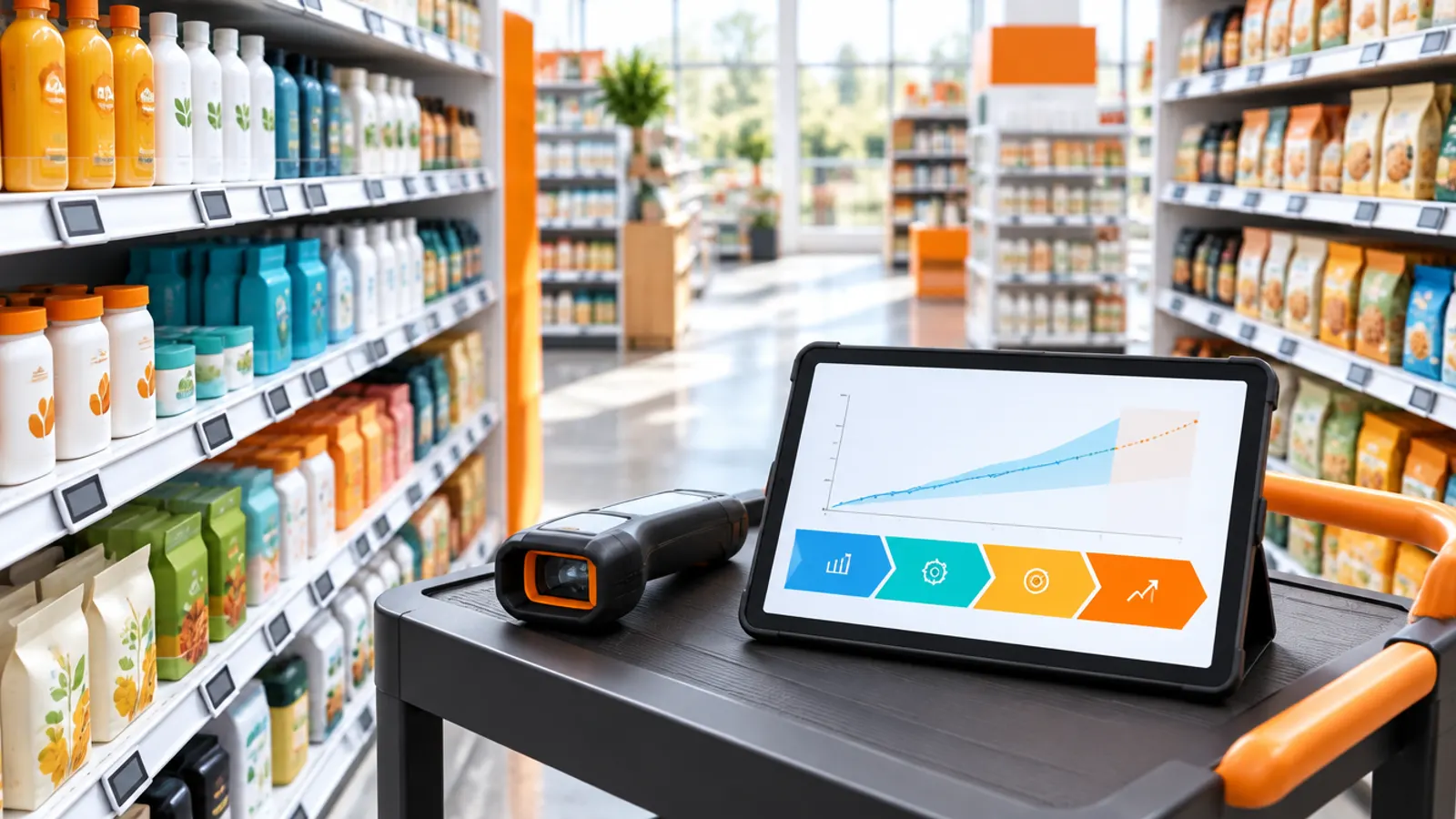
Contents
Your website says the navy jumper in medium is in stock. The customer drives in and the shelf is empty.
That gap is where most retail AI plans fall over. It's why a retail AI roadmap has to start with data before it goes near a model.
I plan it in four stages. First, one trusted view of product, stock and customer. Then a governed layer that gives every report and AI tool the same business language.
After that come agents that forecast, reorder, price and serve customers. Last, AI becomes part of how merchandising, supply chain and stores work every day.
Retail creates more data than almost any industry. Yet stores, e-commerce, the warehouse and finance often report different stock and different sales for the same day.
This plan works whatever your ERP, point of sale, order management and e-commerce platforms are. For two retail and FMCG programmes I've written up, read my Middle East retail migration case study and the FMCG reporting recovery.
Each stage relies on the one before it being in decent shape.
Three years, four stages
Now: data foundation
Product, stock, sales and customer data from stores and online in one governed platform.
Year 1: governed intelligence
One business language for products, locations, stock and customers, AI governance and the first quick wins.
Year 2: scale AI agents
Agents for forecasting, replenishment, pricing, store operations and customer service.
Year 3: AI embedded at scale
AI across merchandising, supply chain and stores, with suppliers and partners connected.
Before any AI, you need one place where all your retail data lands and agrees. That means joining systems that grew up apart: the ERP, the tills, e-commerce, order management, the warehouse, loyalty and the supplier portal.
Here's what I'd put in place in the first months:
- A modern data platform, often a lakehouse, which is a single store for raw and cleaned data. It takes sales, stock, orders, returns and loyalty data from every channel, close to real time where it matters.
- Owners and quality rules for product, location and customer data, plus a catalogue that shows where each figure came from. Card data stays out of the platform and inside your PCI DSS controls, the card industry's security standard.
- Self-service reporting, so buyers, planners and store managers see the same sales and stock figures as finance.
The product master is usually the hardest part. It's the record of every item you sell, with its size, colour, pack, supplier and attributes.
Take a fashion retailer with 40 stores and a website. The website lists a dress in "Navy" with sizes 8 to 16. The store system holds it as "NVY" in S, M and L, under a different item code from a different buying file.
Ask any AI tool how that dress is selling and it sees two products, each doing half as well as the real one. The fix is dull work. Someone maps the codes, agrees one colour list and one size scale, and makes the buying team own every new item from day one.
Now picture a grocer that sells water as a single bottle, a six-pack and a case of 24. The tills count bottles, the warehouse counts cases and the website counts packs. Until those convert cleanly, stock for the same product will never match, and any replenishment tool built on top will order the wrong amount.
So what does done look like? When the head of stores and the head of e-commerce pull yesterday's sales for the same store, they get the same number. I'd happily spend three months on this to avoid a year of arguing about why the forecast is wrong.
- Point of saleEvery basket and return, by store
- E-commerce and ordersOrders, clicks and deliveries
- Warehouse and stockStock by location and in transit
- Landing zoneRaw copies with lineage
- One product masterOne code, one colour, one pack size
- ReportsSales and stock that match finance
One view of product, stock and customer across every channel
The core of year one is a semantic layer. That's a shared dictionary. It tells every report and AI tool what product, store, stock, promotion and customer mean, and how to calculate them.
A trading director asks for "availability in the top 50 stores". Does availability mean on the shelf, in the back room or in the system?
Are the top 50 ranked by this year's sales or last year's? If a copilot answers with its own guess, you get a confident number that nobody can defend in the Monday trading meeting. The semantic layer settles it once, and the copilot then uses the same rule as the trading director's own report.
AI governance starts in the same year. Personalisation and pricing use customer data, so consent and data protection rules set the limits.
I'd keep one register of AI use cases. Each gets an owner, a risk rating, test results and a note on where a person checks the output.
Be clear about which decisions customers can see. A product description is low risk. A price someone pays, or an offer one shopper gets and another doesn't, needs far more care.
Then deliver quick wins. I like these because the data behind them is usually in reasonable shape:
- Product content: descriptions, attributes and translations drafted from the product master and checked by a person.
- Store copilots: store teams ask about stock, deliveries, promotions and procedures in plain language.
- Customer service summaries: contact history and order status pulled into one short note for the service agent.
Take an electronics retailer adding a few hundred new items a month. Each one needs a description, a spec table and often a second language. The copilot reads the supplier's spec sheet, drafts the page and flags gaps, like a laptop with no battery life listed.
A merchandiser checks every claim and decides what goes live. The supplier's sheet stays the only source of facts, and that rule matters more than the model you pick.
Now picture a store manager at 7am on a Thursday. A cereal promotion started on Monday and the shelf is nearly empty. She asks the copilot when her next cereal delivery arrives and how many cases are on it.
The copilot checks the delivery schedule and open orders. It tells her 12 cases arrive tomorrow at 6am, which won't last the weekend at this week's sales rate. She decides whether to call the regional team or pull stock from the back room.
- Store manager asksWhy is cereal empty again on Thursday?
- Semantic layerStore, product, promotion and availability rules
- Governed dataSales, stock, deliveries and promotions
- Copilot answersWith the cause and the source of each figure
- Manager actsChanges the order or flags the promotion
An answer the trading director would give
- Dynamic pricing
- Personalisation
- Demand forecasting
- Store copilots
- Product content
- Service summaries
- Later
- Plan
- Start now
Year two moves from copilots, which answer questions, to agents, which take actions inside limits you set. In retail, these usually pay back first:
- Forecasting and replenishment. The agent forecasts by store and day, proposes orders and moves stock between stores before shelves go empty.
- Pricing and markdowns. It proposes markdowns for slow sellers and price changes inside the rules the commercial team sets.
- Store operations. Shelf cameras or RFID tags (radio tags counted without scanning each item) flag gaps, and the agent creates a task for the store team.
- Customer service. It handles order tracking, returns and simple complaints, and passes complex cases to a person with the context ready.
Here's how a replenishment agent plays out for a grocer before a hot weekend:
- On Thursday morning it reads the weather forecast, sales from similar weekends last year and current stock in each store.
- It sees that a group of stores will run out of bottled water and ice by Saturday lunchtime.
- It proposes extra orders from the depot and a transfer of stock from two stores where sales are slow.
- Orders inside the agreed limits go straight through. Anything bigger, and every store-to-store transfer, waits for a planner.
- The planner rejects one transfer because that store has a local football match, and approves the rest.
Pricing works the same way. Picture a fashion chain at the end of summer with hundreds of slow lines.
The agent picks the ones that need a markdown to clear by August. It proposes 20 or 30 percent off, above the floor prices the commercial team set.
It leaves the core range alone and never prices below cost. The merchandiser holds back swimwear that still sells on holiday weekends and signs off the rest.
Luxury needs a lighter touch. Someone asking about a repair on a handbag worth thousands should hear from a person. There the agent pulls the purchase record and repair history and drafts a reply, and a client adviser sends it in their own words.
Every agent needs an owner in the business. The commercial director owns the pricing agent, and the head of supply chain owns replenishment. IT runs the platform, and the business owns the decisions.
- ForecastDemand by store and day, with weather and promotions
- CompareAgainst stock on hand and in transit
- ProposeOrders and transfers between stores
- ApprovePlanner checks anything over the limit
- OrderOrders sent to suppliers and the warehouse
- LearnActual sales tune the next forecast
One business owner per agent
If your stores and your website disagree about what is on the shelf, no AI model will sort it out for you.
By year three AI sits inside merchandising, supply chain, stores and customer engagement. Buyers, planners and store teams work with agents every day, and the whole chain runs under the same governance.
Sharing data with suppliers changes the economics.
Take an electronics retailer sharing weekly sell-through and a 12-week headphone forecast with the brand that makes them. The supplier plans production against real demand. The retailer has a better chance of stock before Black Friday and less left over in January.
Retail media follows the same pattern. A grocer lets a drinks brand run offers in its app to shoppers who agreed to receive them, using the same governed customer layer. The brand sees results for groups of shoppers, and individual records stay with the grocer.
Is this the year for personalisation at scale in your retail AI roadmap? Yes, if the product master and consent records held up through years one and two.
- Chief operating officerOwns the agent portfolio and its resultsAI governanceRegister, testing and a kill switch
- Commercial and supply chain directorsOwn the agents in their area
- Forecasting agentOwned by the head of planning
- Pricing agentOwned by the commercial director
- Store operations agentOwned by the head of stores
- Service agentOwned by the head of customer service
- AI agents and copilotsForecasting, replenishment, pricing, store and service agents, with business owners
- Governed intelligence layerSemantic model of products, locations, stock and customers, plus the AI register
- Data foundationLakehouse with sales, stock, orders and loyalty data, catalogue and lineage
- Retail systemsERP, point of sale, e-commerce, order management, warehouse and loyalty
Some things apply from the first month to the last:
- Customer consent and privacy. Personalisation only works if customers trust it. Use data they agreed to share, and keep card data inside PCI DSS controls.
- An open, multi-platform setup. Retail technology changes fast. Keep the freedom to swap models, platforms and partners.
- Governance that matches the risk. Use light controls for content and copilots and stronger ones for pricing and anything customers see.
- Your people trained. Store teams and buyers decide whether the agents get used. Train them early and listen to them.
Training is easy to underrate. A store manager who gets ten wrong tasks from a shelf camera in week one will ignore task eleven.
The most common mistake is buying a personalisation or pricing engine before the product and stock data can support it. The engine recommends a TV that's out of stock, or prices a markdown against last year's cost. Trust goes in weeks and takes a year to rebuild, which is why I'm wary of any plan that starts with the engine.
The second mistake is running AI as a head-office project. Stores see agents as extra work unless the tasks they create are right. Pilot in a handful of stores with real store managers, fix what they tell you, and only then roll out.
Say a gap-detection pilot flags an empty crisps shelf. The crisps had moved to an end-of-aisle display for a promotion.
Nobody updated the planogram, the plan of what sits where. The agent is right by its rules and wrong in the store. Only the store manager would spot that.
- How it goes wrong: A pricing or personalisation engine bought firstWhat works: Product master and stock data fixed first
- How it goes wrong: Product and stock data nobody trustsWhat works: One trusted view across stores and online
- How it goes wrong: A head-office project stores never asked forWhat works: Pilots run with real store managers
- How it goes wrong: No owner for the agents' decisionsWhat works: A business owner for every agent
Working out where your own business should start? Book a call and bring one real question, such as whether your product master is ready for forecasting. We'll work through it together.
What is a retail AI roadmap?
It's a staged plan for using AI across a retail business. It starts with one trusted view of product, stock and customer. It then adds governed AI and agents, and ends with AI built into daily retail work.
Where should a retailer start with AI?
Start by bringing product, stock and sales data from every channel into one governed platform, and fix the product master. Then deliver quick wins such as product content, store copilots and customer service summaries.
Which retail AI use cases pay back first?
Product content and service summaries are quick to deliver. Demand forecasting and replenishment usually bring the most value once the data is ready, with pricing and markdowns close behind.
Do retailers need a new ERP before using AI?
No. AI sits on top of your current systems through the data foundation. What matters is that product, stock and sales data is the same in stores, online and finance.
How long does a retail AI roadmap take?
I plan it over three years once the data foundation is under way. Year one builds the governed layer, year two scales agents and year three embeds AI. Quick wins should show value in the first year.

Written by
Noel D'Costa
AI roadmap for manufacturing: from plant data to agents
Your AI pilot works on one line and never reaches the second plant. Here is the four-stage roadmap I use to fix that, with worked examples from presses, rolling mills and planning desks.

AI strategy for banks: a three-year roadmap
Bank AI pilots often stall in model risk review. This roadmap avoids that in four stages, from governed customer data to agents for onboarding, credit, fraud and AML, with worked examples from retail, SME and corporate banking.
AI roadmap for insurers and wealth managers
Insurers and wealth managers keep most of what they know in documents. Here is how I plan AI for them over three years, with worked examples from claims, underwriting and advice.

Databricks Genie and Agent Bricks: AI on enterprise data
Databricks Genie lets business users ask questions of governed data in plain language, and Agent Bricks is where developers build agents on top. Here is what each does today, what makes answers accurate, where it breaks, and how to run a first pilot in manufacturing or defence.
Next step
Running an ERP programme right now?
If this article touched on a programme you are live in right now, a 30-minute conversation usually gets further than another week of internal analysis.